

Airspan Advisory / Experience in Action
Supply Chain Transformation
How a major aerospace manufacturer brought planning, procurement and logistics together and what it takes to turn organisational transformation into operational reality.
4-minute read
Industry
Aerospace Manufacturing
Focus
Organisational Transformation
My Role
Integration Manager
This case study explores how three supply chain functions were brought together to establish a more integrated way of working within a complex aerospace manufacturing environment.
Confidentiality note:Certain operational and financial details have been omitted or generalised to respect confidentiality obligations.
01 / The Opportunity
From Separate Functions to One Integrated Supply Chain
- A major aerospace manufacturer undertook a strategic transformation to establish its first integrated end-to-end supply chain organisation in the UK.
- The initiative brought together three previously separate functions — Planning, Procurement and Logistics & Transport — across two manufacturing sites.
- The ambition extended beyond organisational restructuring. It was to create a unified supply chain organisation able to face a steep production ramp up.
02 / The Challenges
Integration Goes Beyond the Organisation Chart
Bringing functions together required more than a new operating structure. It meant establishing common ways of working while navigating the complexity of a large and matrixed industrial organisation.
No Established Integration Playbook
With no predefined methodology for integrating the three functions, the challenge required an entrepreneurial mindset: building a tailored integration approach from the ground up while navigating organisational complexity.
Overcoming Functional Silos
Planning, Procurement and Logistics & Transport continued to operate in silos, both operationally and culturally. Breaking down established ways of working required shifting mindsets, encouraging collaboration and building a shared identity.
Building Alignment in a Matrix Organisation
Establishing effective governance required rapidly building trust, securing leadership buy-in and forming coalitions across multiple reporting lines, while reconciling competing local and central priorities.
03 / The Approach
Six Dimensions. One Transformation.
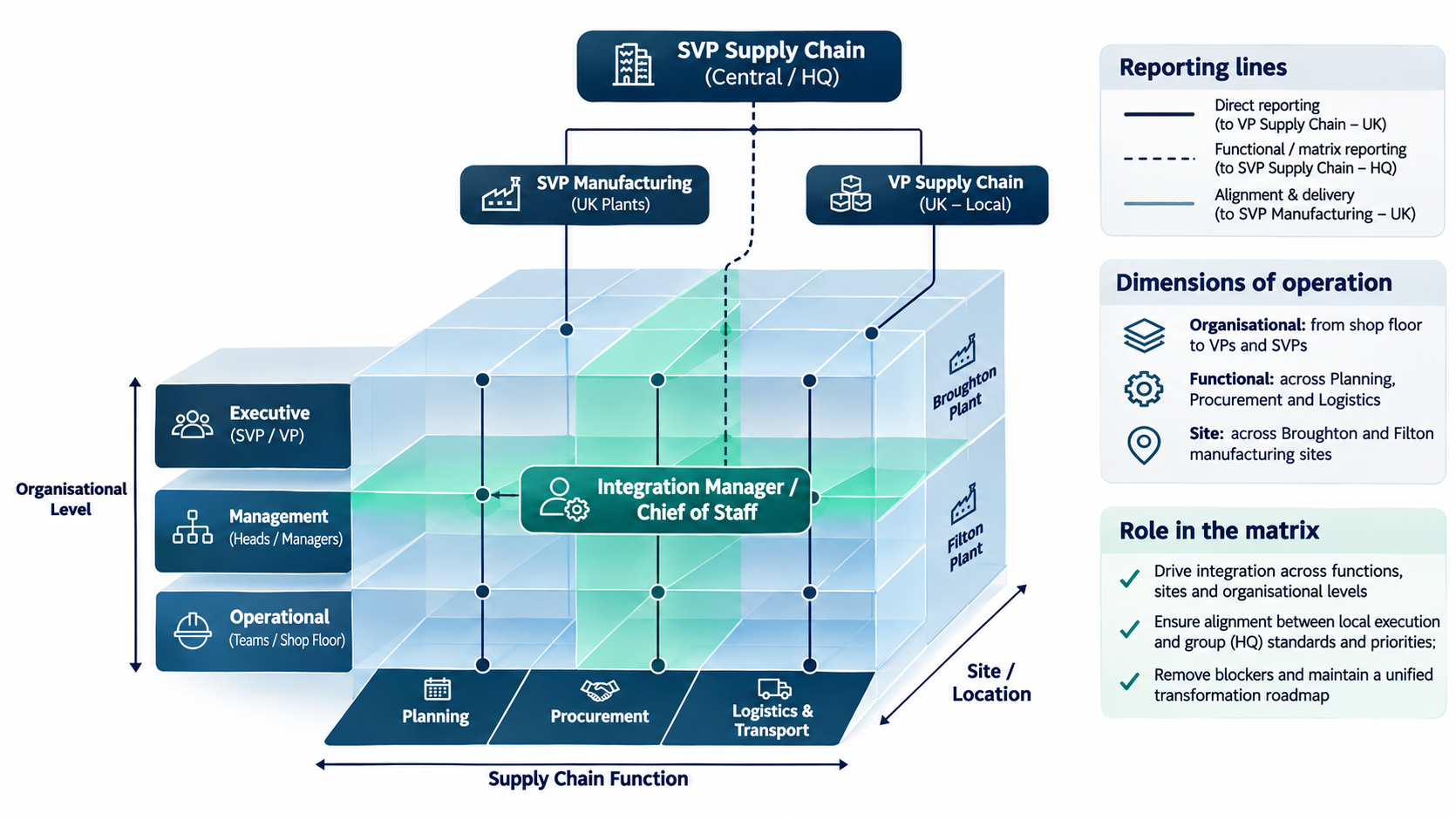
As Chief of Staff to the Supply Chain VP, I co-led the integration alongside the VP and leadership team, helping translate the strategic decision into a coordinated programme of organisational change.
Click any of the six dimensions to explore its deliverable
INTEGRATION
Dimension 01 / 06
GOVERNANCE
Established a governance structure to navigate a complex matrix organisation, aligning the priorities of local manufacturing plants with those of the central supply chain leadership.

From Strategy to Execution
Turning a Strategic Decision into Operational Reality
01
Align
Build relationships, establish trust and agree on integration priorities.
02
Structure
Develop the 90-day roadmap, governance arrangements and responsibilities.
03
Implement
Coordinate change management, process alignment and cross-functional collaboration.
04
Embed
Introduce shared performance management, review progress and reinforce new ways of working.
05
Refine
Review outcomes, capture lessons learned and continuously adjust governance, processes and ways of working.
Continuous Improvement
A conceptual summary of the integration journey, not a dated project chronology.
04 / The Outcomes
Six months later
The initiative contributed to establishing the organisational foundations needed to coordinate supply chain activities supporting aircraft manufacturing operations.

Delivery: Ensuring Operational Continuity
Maintained business continuity throughout the integration, minimising operational disruptions and safeguarding critical supply chain activities.
Governance: Establishing Agile and Responsive Governance
Established a robust yet agile governance framework, enabling timely decision-making.

Organisation & Strategy: Translating Strategy into Action
Translated company-wide strategic priorities into clear, actionable departmental objectives, ensuring alignment across functions and a shared understanding among employees.

Culture: Building a Shared Identity
Fostered a new organisational identity and sense of belonging, bringing employees from previously separate functions together around a shared purpose and culture.
Founder’s Perspective
An organisational chart can change overnight. Getting people to work differently takes months, trust, and consistent leadership.

Key Takeaways
01Governance: Establishing a foundation for success
Effective governance is the foundation of successful integration. Establishing the right cadence, a disciplined management rhythm and clear sequencing across departments is essential to maintaining alignment and momentum. The integration manager’s role is to accelerate decisions, not introduce additional bureaucracy.
02Processes: Breaking down silos requires a mindset shift
Organisational integration goes beyond harmonising processes. It requires changing established behaviours, mindsets and ways of working to foster a culture of cross-functional collaboration.
03Performance: Aligning KPIs across organisational boundaries
Measuring the performance of a newly integrated organisation requires streamlining existing KPIs, eliminating redundancies and aligning performance measures across functions and reporting lines.
04Financials: Redefining OPEX and CAPEX targets
Financial targets must reflect the new organisational blueprint, rather than simply adding together the budgets of previously independent departments. Integration creates opportunities to reassess resource allocation, eliminate duplication and capture synergies.
05Operations: Protecting business continuity during transformation
Maintaining operational continuity, particularly supplier relationships and material flows, is essential. A gradual, phased implementation helps minimise disruption while embedding new ways of working.
06People: Encouraging cross-functional collaboration
Creating opportunities for cross-functional teams to work together enables the cross-pollination of ideas, knowledge sharing and stronger relationships, helping overcome historical silos.
This case study reflects professional experience gained by Airspan Advisory’s founder in a previous leadership role. Project descriptions and illustrations have been independently prepared for general information and do not represent a client engagement undertaken by Airspan Advisory. No former-employer endorsement is implied.
Case Study
Take the Story With You
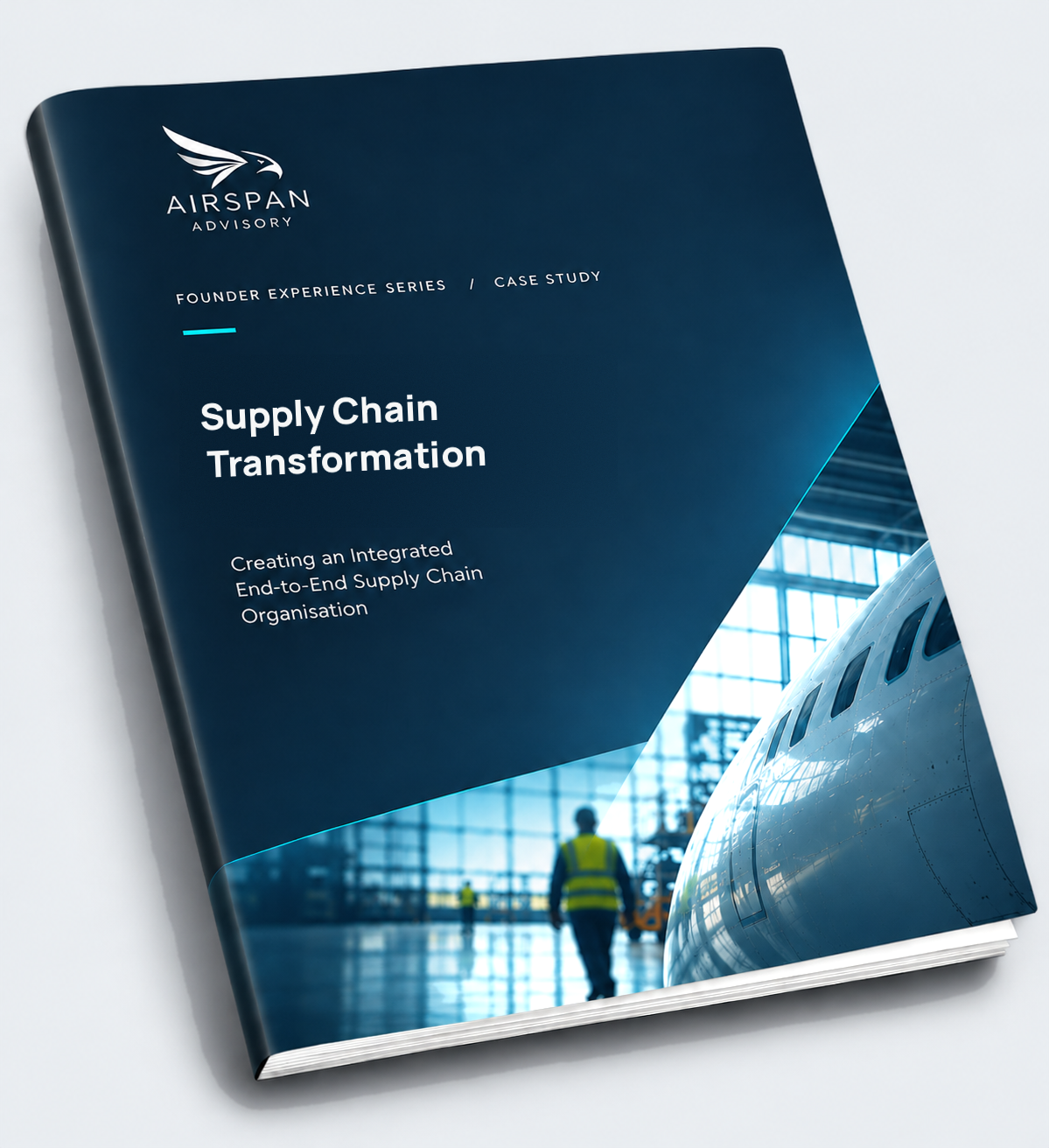
Request the case study document, including the six-dimension integration framework and key lessons learned.
Request Case StudyContinue the Conversation
Facing a Similar Transformation Challenge?
Whether you’re integrating functions, strengthening governance or improving operational performance, Airspan Advisory helps leadership teams translate strategic decisions into practical execution.